What to Expect as a First-Time Surrogate from Application Through Postpartum


If you're a first-time surrogate, you may be wondering what happens between submitting an application and delivering a baby. This guide covers the process itself, phase by phase, so you know what each step involves before it happens.
Gestational surrogacy uses IVF (in vitro fertilization), so the surrogate has no genetic link to the baby she carries. Surrogate Alternatives, a San Diego surrogacy agency founded in 1998, has a team that includes current and former surrogates who have lived the process.
What Does the Surrogate Alternatives Application Involve?
The Surrogate Alternatives application is a screening and planning tool. It covers eight topics, including your pregnancy history and your medical background. You can skip questions that do not apply.
Completing the application does not create a contract or obligate you to move forward, and it does not guarantee acceptance. The application takes about 15 to 25 minutes to complete. A member of the Surrogate Alternatives team contacts you within 24 hours on weekdays or within 48 hours if you submit over a weekend.
Surrogate Alternatives lists its qualifications for surrogates on the requirements page. Candidates have had at least one healthy pregnancy and birth of their own and are currently parenting. They have also had a delivery within the last five years (or their only delivery was full-term within the last five years).
Fertility clinics set the age range for surrogates based on medical best practices, according to the requirements page. If you have a spouse or long-term partner, that person needs to be fully informed and genuinely supportive.
Your BMI (body mass index) needs to fall within the range the fertility clinic requires or be close enough to discuss next steps. You also need OB (obstetrician) and hospital records available so an IVF physician can review your pregnancy and delivery history.
The full list is on the Surrogate Alternatives surrogate requirements page. If you are unsure whether you qualify, the Quick Surrogate Interest Form lets the team follow up and answer your questions.
Screening and Medication Cycle Appointments Add Up to a Time Commitment
After the application, the time commitment surprises first-time surrogates most, according to founder Diana Olmeda. Psychological screening and medical screening appointments, plus follow-up appointments during the medication cycle, all add up.
Surrogate Alternatives explains the time commitment in its documents and during intake, and again when it assigns a Journey Coordinator, the dedicated team member who manages a surrogate's case through delivery. Surrogate Alternatives says surrogacy can span a year or more from first contact to birth, though timelines vary. The team can walk through a realistic timeline during initial conversations.
How Does Matching Work with Intended Parents?
The next phase is matching, and Surrogate Alternatives curates matches to find the right fit for both the surrogate and the intended parents, drawing on a national surrogate network. There is no waiting list. Many intended parents begin reviewing potential matches within days, based on compatibility across that network.
Surrogate Alternatives works to match you with intended parents whose values and communication style align with yours. No match moves forward without your clear and enthusiastic yes.
The match meeting is often one of the most anticipated and stressful moments for both sides, because you want to make a good impression. You are meeting a stranger who may become part of your life for a year or more, and your life will then include that person's family. Diana Olmeda, founder of Surrogate Alternatives, says it is important to ask questions about compatibility and support before you agree to move forward together.
Screening Confirms Readiness and Safety After the Match
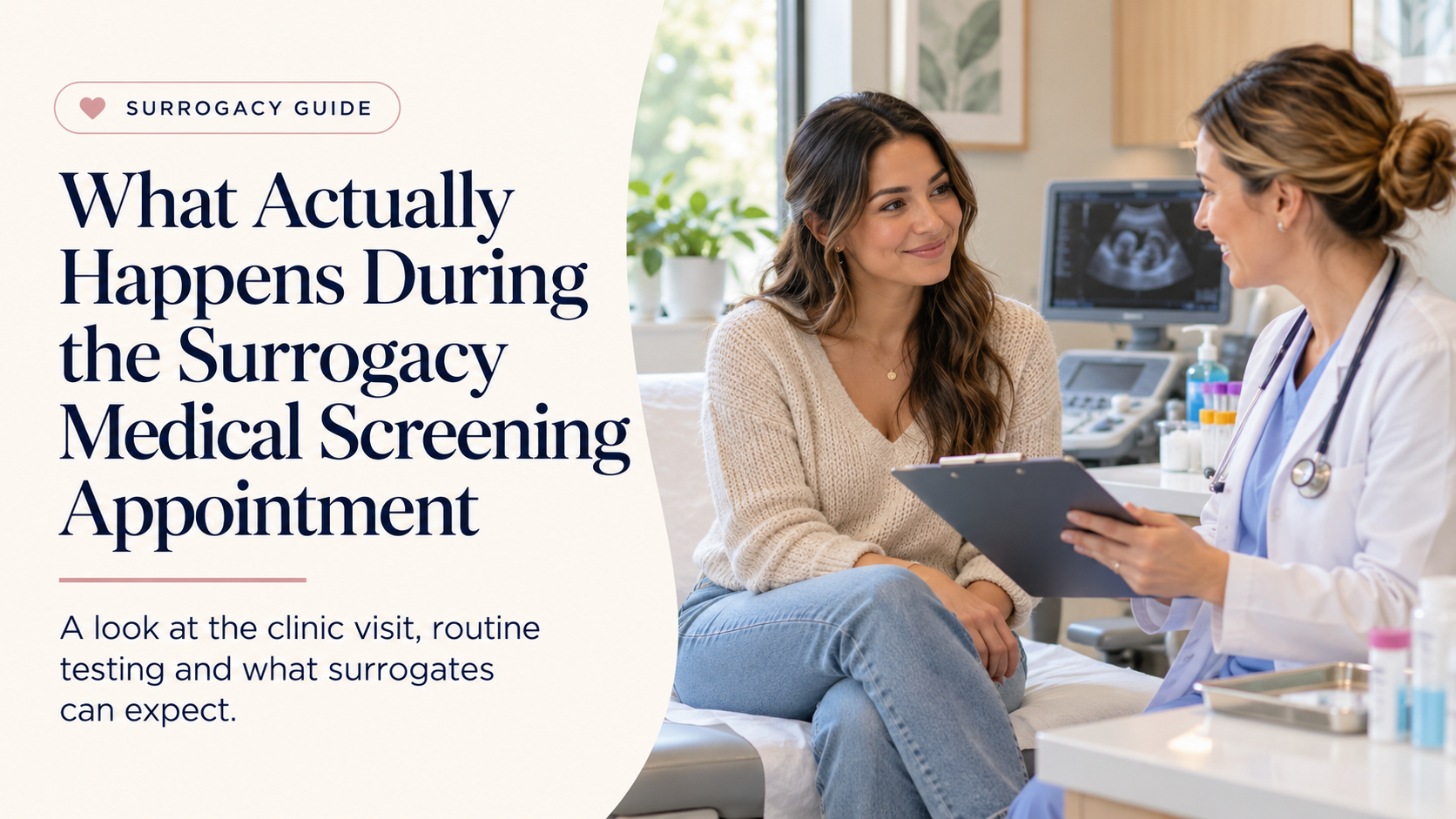
Medical screening and a psychological evaluation both come after matching. The psychological evaluation confirms emotional and psychological readiness, and the medical screening confirms that carrying another pregnancy is safe for you. Surrogate Alternatives tells surrogates that the team needs both screening milestones to make sure the surrogate is a good candidate and that the process is safe for her.
Cleveland Clinic, a nonprofit academic medical center, also places screening after matching in its gestational surrogacy overview, which says contracts and screenings follow carrier selection. According to Surrogate Alternatives, clinics review your medical background to assess whether another pregnancy is likely to be safe for you and the baby.
What Medical Screening Involves
Medical screening includes a complete medical evaluation by a qualified medical professional, and an IVF physician reviews your OB and hospital records. The American Society for Reproductive Medicine (ASRM), a professional society for reproductive medicine, recommends testing of all surrogates and their partners before embryo transfer.
ASRM also lists a urine drug screen among preconception tests. It states that a uterine cavity evaluation is highly recommended, by saline-infusion sonogram or another modality.
What the Psychological Evaluation Covers
A qualified mental health professional completes the psychological evaluation, which includes a clinical interview and psychological testing, along with counseling about the implications of surrogacy. ASRM says a surrogate and her partner or support person both need to participate in that counseling. The society places the psychological evaluation before legal contracts with the intended parents.
Surrogate Alternatives refers surrogates to Steven Covelluzzi, an independent psychologist, for this evaluation. The surrogacy psychological evaluation post walks through what the evaluation covers.
A Joint Session Brings Everyone Together Before Treatment
ASRM says the physician should require a joint session led by a mental health professional, where the surrogate and her partner meet the intended parents. Topics include the expected timeline of treatment, the number of embryos to transfer, how frequently and in what format everyone communicates and how each party envisions the relationship after the arrangement ends.
Legal Contracts Protect Everyone Before Medical Procedures Begin
After matching, reproductive law attorneys draft the surrogacy agreement. ASRM, a professional society for reproductive medicine, says surrogates and intended parents should each have independent legal counsel licensed in the applicable state. Surrogate Alternatives coordinates with reproductive law attorneys.
ASRM lists the central issues an agreement should address: legal parentage, decision-making about prenatal testing and pregnancy management, coverage for medical expenses, financial arrangements and escrow. The society also states that no agreement should contradict constitutionally protected reproductive decision-making by a gestational carrier, and it says legal counsel should present the assisted reproductive technology practitioner with a legal clearance letter.
SeedTrust, an independent third-party escrow provider, manages surrogate compensation. Surrogate Alternatives does not hold or control escrowed funds at any point.
Embryo Transfer Preparation Begins After Legal, Psychological and Medical Clearances
After the contracts and the psychological and medical clearances are complete, you begin medications as directed by the fertility clinic and prepare for embryo transfer. Once the embryos form, Cleveland Clinic, a nonprofit academic medical center, describes embryo implantation into the surrogate's uterus. Surrogate Alternatives does not perform IVF or fertility treatments. The fertility clinic directs your medications.
What Does Pregnancy Look Like as a Gestational Surrogate?
If the transfer is successful, you continue working closely with your OB and the Surrogate Alternatives support team throughout pregnancy. Once you match, Surrogate Alternatives assigns you a dedicated Journey Coordinator who manages your case through delivery.
Your Journey Coordinator supports and advises you and becomes your biggest cheerleader. She has been a surrogate herself and understands how important and life-changing the experience is. Diana Olmeda, founder of Surrogate Alternatives, says surrogates are never alone because support coordinators also reach out with additional resources and support throughout the process. Each case is different, so Surrogate Alternatives tailors the support to each surrogate's needs.
Surrogate Alternatives was the first surrogacy agency to offer a wellness package. The Pregnancy Wellness Program includes dietary and nutritional counseling, acupuncture, massage and prenatal vitamins. Surrogates also have an online support group with monthly meetings, mentorship from experienced surrogates, three in-person retreats each year and a 24/7 emergency line to reach management.
Delivery Planning Covers Your Preferences and State Paperwork
As delivery approaches, your team coordinates birth plans and logistics with the intended parents and the hospital. ASRM, a professional society for reproductive medicine, lists hospital preferences that a surrogate discusses in counseling. The list includes a comfort level with intended parents in the delivery room and openness to baby caretaking or interaction after delivery.
Surrogate Alternatives coordinates with reproductive law attorneys nationwide to manage contracts, pre-birth orders and parentage, and parentage orders are filed before or after birth depending on the state. Hospital filings also vary by state, and the surrogacy birth plan guide covers them.
Postpartum Support Continues After Delivery
After birth, there is time for recovery and emotional support as you return to your regular life. Surrogate Alternatives stays in contact to check that your postpartum recovery is going well without being overbearing. Diana Olmeda, founder of Surrogate Alternatives, says a surrogate has just been through a lot physically and will be going through the emotions of the process coming to an end, so the team makes sure she knows the team is there.
Once the baby arrives, Diana says most intended parents without previous children are starting something brand new and have no idea what they are in for. If communication slows and you are used to frequent calls or texts, she suggests giving them some grace as they adjust to the newborn stage.
Start a Conversation about Becoming a Surrogate
Surrogate Alternatives welcomes women to explore surrogacy without pressure or judgment. The application does not create a contract or obligation, and if you are unsure whether you qualify, you can use the Quick Surrogate Interest Form or speak with Surrogate Alternatives.
Diana Olmeda has led Surrogate Alternatives since 1998. When you're ready, you can start the surrogate application or talk with the Surrogate Alternatives team.
FAQs